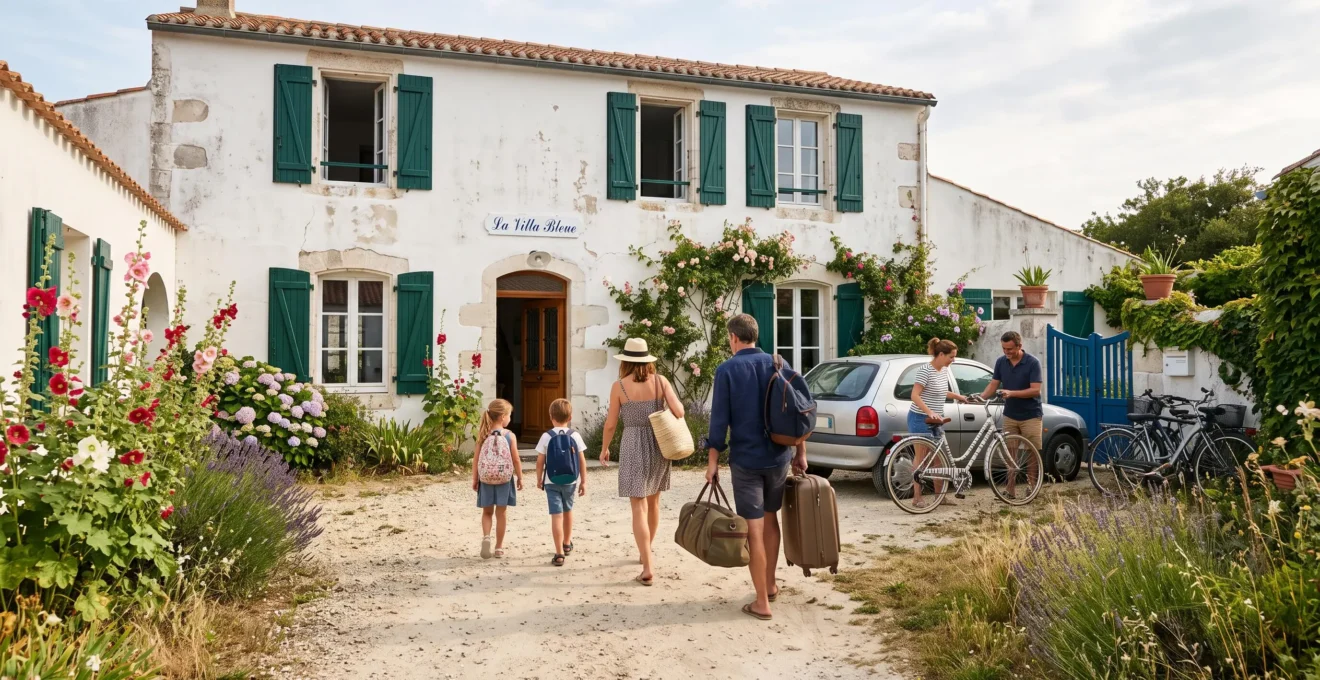
Direct answer: The right villa rental Île de Ré choice comes down to matching your group (couple, family, friends) to the features you will actually use (outdoor space, privacy, pool, parking), then choosing a village whose atmosphere fits your rhythm. Prices and availability can shift sharply with the season, so the “best” villa type is often the one that fits your dates as much as your wish list.
If you are hesitating because listings look similar while prices do not, start with a simple rule: pay for what changes your daily comfort (sleeping layout, outdoor space, location), and be cautious about paying extra for features you may barely use (a large garden in winter, a pool during a short spring break).
Your quick decision checklist for an Île de Ré villa
- If you want the “Île de Ré look” and village life: shortlist a traditional Rétaise-style villa near shops and the harbour streets.
- If comfort and space matter most: focus on contemporary villas and compare layout, parking, and outdoor areas.
- If you travel with children in peak season: prioritise family-friendly layouts; a pool can help, but location and shade often matter just as much.
- If you want quiet evenings and nature: look west, and accept longer rides/drives to busier centres.
- Before paying: verify the exact address area, sleeping capacity details, fees/deposit, and cancellation terms.
What Types of Villas Can You Rent on Île de Ré?
On Île de Ré, “villa rental” often overlaps with the French idea of location saisonnière: a furnished holiday home rented for a short stay. In practice, you will see recurring “types” in listings—not official categories, but useful baskets for comparing properties objectively.
Rather than trusting labels like “charming” or “luxury”, compare villas through concrete criteria: sleeping capacity (how many people can sleep comfortably, not just “sleeps X”), outdoor space (private garden vs shared or overlooked), parking, and walkability to a village centre.
Traditional Rétaise-style villas (whitewashed, shutters, enclosed courtyards)
These are the classic island houses many travellers picture: white walls, green or blue shutters, often with a walled courtyard that protects from wind and adds privacy. They can be ideal if you want village life and a sense of place, but interiors may be more segmented, and bedrooms can be smaller than in newer builds.
How they differ in real life: you often gain charm and location, but you should check ventilation, storage for bikes, and whether the outdoor area gets sun at the hours you care about.
Contemporary villas (open-plan living, larger glazing, newer amenities)
Modern villas tend to offer easier “holiday living”: larger living rooms, straightforward circulation, and practical perks like dedicated parking. If you are travelling as a group, a contemporary layout can reduce friction (more bathrooms, clearer separation between sleeping and social spaces).
What to compare: privacy (large windows can mean being overlooked), sound insulation, and how well outdoor areas work on windy days.
Family villas with pool (or strong outdoor setup)
Listings marketed for families often highlight pools, terraces, and outdoor dining. A pool can be a genuine comfort in peak season, but it is not the only family “upgrade”: shade, a safe enclosed garden, and a bedroom layout that lets children sleep while adults stay up quietly often matter more.
Seasonality and “value for money”: when demand peaks, you may pay more for features you would not prioritise off-season. If your dates are fixed, decide in advance what you will not pay extra for (for example: a bigger garden than you can use).
Side-by-side: Rétaise-style villa vs modern pool villa
To decide faster, use a direct comparison: not “old vs new”, but experience vs function. This helps you avoid paying too much for a villa that looks great in photos but does not fit your daily routine.
| Decision factor | Traditional Rétaise-style villa | Modern villa (often with pool) |
|---|---|---|
| Daily atmosphere | Strong local character, often closer to village lanes | Comfort-first, indoor/outdoor flow, “resort-home” feel |
| Layout | May be more segmented; check stairs/bedroom sizes | Often open-plan; easier for groups |
| Outdoor space | Courtyard/garden can be private but sometimes smaller | Terraces and larger plots are more common |
| Practicalities to verify | Bike storage, parking, summer airflow | Privacy, pool safety rules/equipment, wind exposure |
| When they can be harder to find | Prime village locations in peak season | Peak weeks when families book early |
If you are unsure what you are looking at, remember: a listing can call almost anything a “villa”. Use the criteria above to standardise your comparisons and make different properties “comparable”.
How Do You Match a Villa to Your Traveller Profile?
The easiest way to avoid overpaying is to match the villa type to your traveller profile first, then refine with village and dates. In other words: decide what would ruin the stay (noise, lack of parking, cramped bedrooms), and only then decide what would “upgrade” it (pool, designer interiors).
At a département level, holiday rentals are a major part of local tourism: chiffres clés tourisme Charente-Maritime 2024 from Charentes Tourisme report over 2,616,100 nights booked in seasonal rentals in 2024 (+13% vs 2023). This does not tell you what your villa will cost, but it does support one practical point: demand can be very strong, so availability and pricing can move quickly by season.
Which villa type suits a couple?
For two people, the best value is often not a large villa—it is a well-located one. A smaller Rétaise-style villa or a compact contemporary home can be perfect if it offers an easy walk or cycle to markets, cafés, and the harbour.
What to prioritise: a comfortable living space, outdoor seating sheltered from wind, and proximity to the places you will actually visit daily. A pool can be pleasant, but for a couple it is often a “nice-to-have” unless you plan to spend many afternoons at the villa.
Which villa type suits a family?
For a family, the “right” villa is usually defined by layout and outdoor safety rather than style. Look for clear sleeping arrangements (children’s room separated enough for early bedtimes), an enclosed outdoor area, and practical access for buggies, beach gear, and bikes.
Season matters: in peak summer, a pool and shaded terrace can genuinely change the day-to-day rhythm; outside of summer, paying extra for a pool may bring less benefit than paying for a better location or a more comfortable interior.
Which villa type suits a group of friends?
Groups tend to be happiest in contemporary villas with enough shared space and, crucially, enough bathrooms. Traditional houses can still work well, but you will want to check whether bedrooms are equal in comfort and whether noise travels easily.
Trade-off to decide early: do you prefer being near nightlife and restaurants, or having more space and quiet evenings? Your village choice will often decide this more than the villa type itself.
A simple decision tree to narrow options fast
- You will spend most days out exploring:
Prioritise location and village walkability over size; a smaller Rétaise-style or compact modern villa is often enough.
- You plan “villa days” (meals, naps, downtime at home):
Prioritise outdoor comfort (shade, wind protection) and a living space that fits everyone.
- You travel in peak summer with children:
Prioritise safe outdoor space and a practical layout; consider a pool only if it fits your real routine.
- You are price-sensitive on fixed dates:
Stay flexible on style and consider quieter villages; confirm the must-haves (beds, parking, outdoor seating).
Cas pratique
A hypothetical example: a family of four travelling in August may focus on an enclosed garden, shade and a layout that allows early bedtimes; they may accept being a little farther from the harbour if it buys outdoor comfort. A couple travelling in June might do the opposite: pick a smaller villa near a lively village centre and spend most days cycling and dining out, making a pool less essential.
If you catch yourself thinking “all villas look the same,” switch to a yes/no shortlist: Is the sleeping setup truly comfortable for our group? Can we live outside without being exposed to wind or neighbours? Is the village right for our pace?
Choosing the Right Village for Your Villa Stay
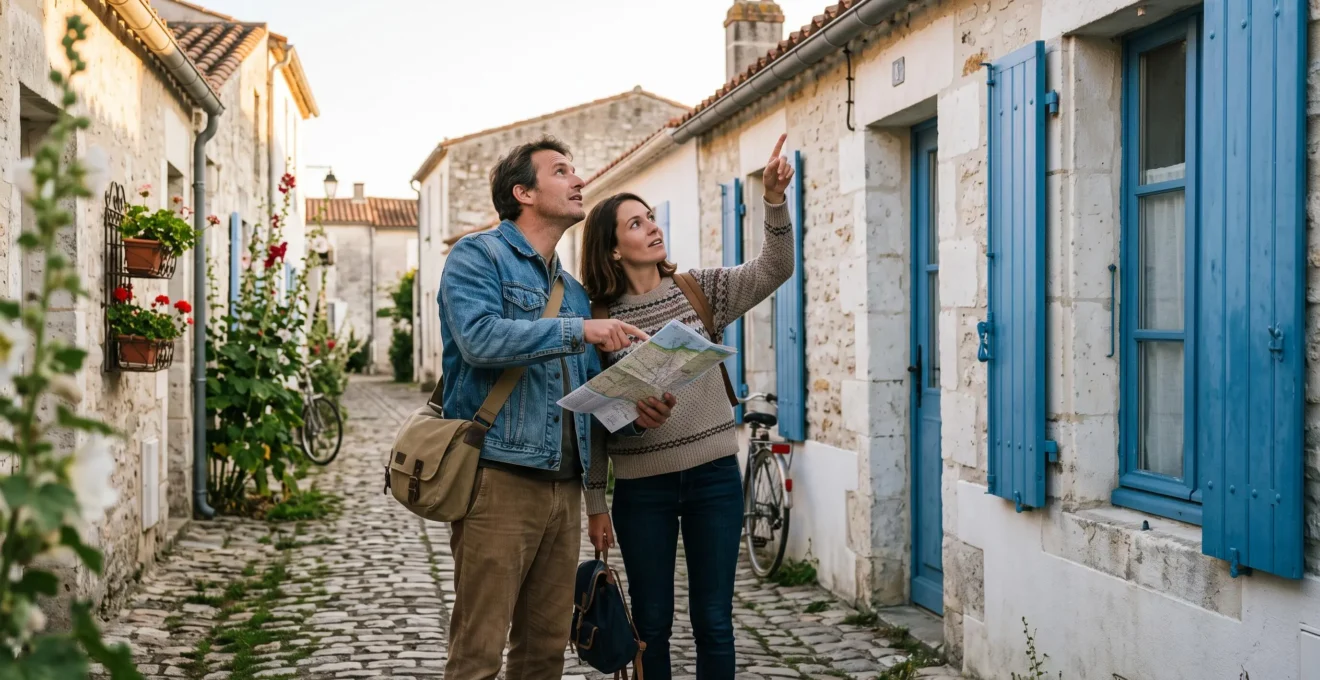
Your village choice anchors everything else: atmosphere, how often you will use a car, and how “busy” your evenings feel. On Île de Ré, two travellers can rent a similar villa type and have completely different stays depending on whether they are based in a lively harbour village or further west where nights are quieter.
Saint-Martin-de-Ré and La Flotte: central, lively, well-serviced
Saint-Martin-de-Ré and La Flotte are often chosen for their harbour atmosphere and easy access to cafés, markets and shops. If you want to minimise driving and enjoy evenings out, these areas make day-to-day logistics simpler—especially for short stays.
What to watch: if you are sensitive to noise or want maximum privacy, check the micro-location carefully (busy streets vs quieter lanes). In peak season, a central position can also coincide with tighter availability.
Quieter western villages: calmer nights, different trade-offs
Heading west can suit travellers who want quieter evenings, quick access to beaches, or a more “slow” rhythm. The trade-off is that you may rely more on bikes or a car for restaurants, shops and some activities, depending on the exact address.
How this affects the villa choice: in quieter areas, outdoor space and home comfort can matter more because you may spend more time at the villa. This is also where a sheltered terrace becomes a daily asset.
Busy harbour village vs quiet west: the same villa type, different stay
Imagine two comparable traditional villas: one near a harbour, one in a calmer western setting. The “type” is similar, but your daily experience changes. Use this comparison to pick what you value most.
| What you care about | Lively harbour village (e.g., Saint-Martin-de-Ré / La Flotte) | Quieter western village |
|---|---|---|
| Evenings | More choices nearby, more movement in season | Quieter, more “home-based” dinners |
| Getting around | Walkability is often higher | More planning for shops/restaurants |
| What is worth paying for | Location and convenience | Outdoor comfort, privacy, space |
| Seasonal effect | High demand can limit choice quickly | Calm can remain a priority even in season |
If you are torn between two villages, decide based on your most repeated daily trip: to the market and cafés (go central) or to beaches and quiet evenings (go calmer). Then let the villa type follow that choice.
Key Checks Before Booking Your Villa
Before confirming a villa rental on Île de Ré, a few checks will protect you from the most common disappointment: paying peak-season rates for a place that does not fit your group or your plans. Your goal is to verify what cannot be fixed after arrival: location, sleeping comfort, and terms.
Also keep in mind that local rules around short-term rentals can evolve. The Communauté de Communes de l’Île de Ré states that since 1 June 2025, short-term rental of a secondary residence requires an authorisation de changement d’usage, with potential fines up to €50,000 for non-compliance: autorisation changement d’usage Île de Ré. As a traveller, this is mainly a reminder to book through transparent listings and to ask clear questions when details are missing.
Price and terms: what to verify before you pay
When a budget is mentioned, remember it can change drastically with the season on Île de Ré. Instead of focusing only on the headline price, check the full “cost to book”: what is included, what is extra, and what happens if your plans change.
- Total price and what it includes: utilities, linen/towels, end-of-stay cleaning (included or optional).
- Deposit and payment schedule: amount, timing, and conditions for return.
- Cancellation terms: deadlines, fees, and whether dates can be moved.
Seasonality: what changes between peak and shoulder season?
Peak periods typically mean fewer options and less negotiating room, while shoulder season can offer more flexibility and quieter villages. Whatever your dates, the practical implication is the same: book earlier for specific must-haves (pool, central location, multiple bathrooms), and stay flexible on “nice-to-haves” if you want a wider choice.
Listing accuracy: capacity, amenities, exact location
The most expensive mistake is a villa that “sleeps 8” on paper but only works comfortably for 6 in reality. Ask for clarity on bed sizes, whether some sleeping spots are sofa beds, and how bathrooms are distributed.
- Confirm the real sleeping setup
Count fixed beds, check if any are in open mezzanines, and confirm bed sizes if it matters for adults.
- Check outdoor usability
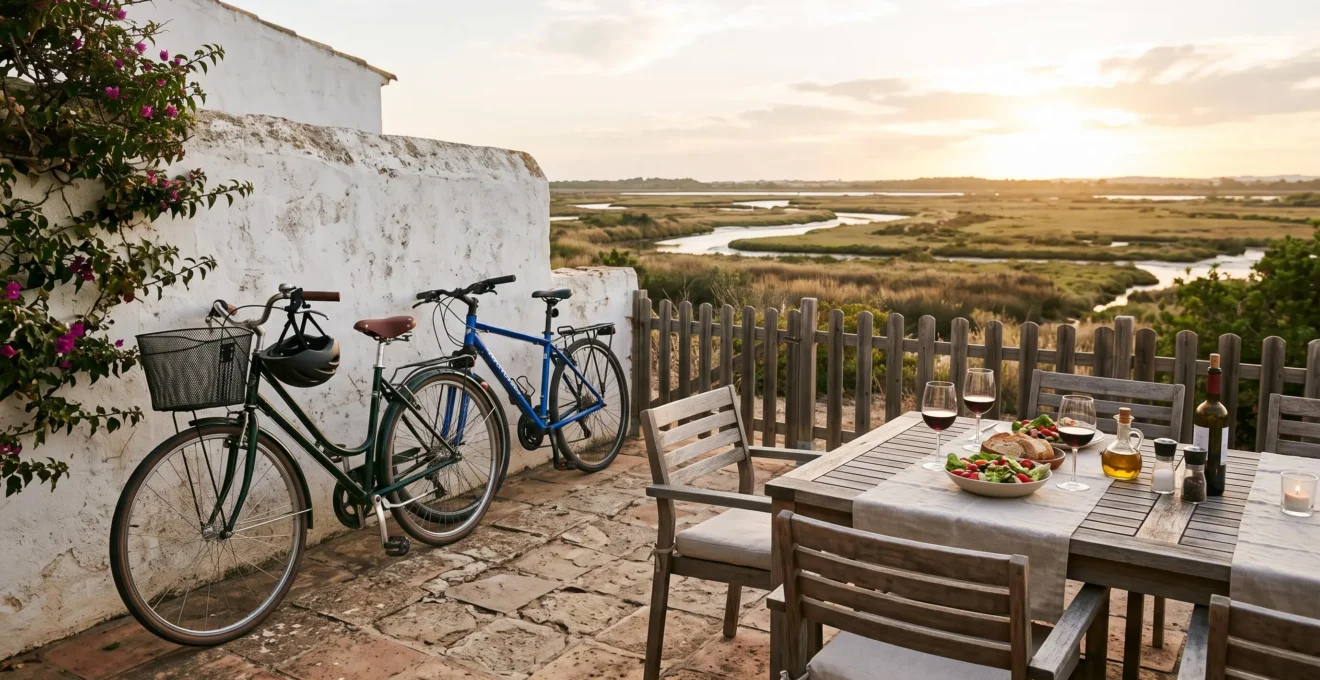
Look for shade, wind protection, and whether the terrace is overlooked—especially if you plan to dine outside.
- Verify mobility basics
Parking, bike storage, and how far it really is to shops or the beach (ask for the neighbourhood name if the exact address is hidden).
- Read terms as carefully as photos
Deposit, cleaning/linen, and cancellation terms are where surprises often hide.
Useful vocabulary check: if a listing uses French terms, “meublé de tourisme” usually refers to a furnished holiday rental, while “location saisonnière” signals a seasonal/short-stay rental.
Making the Most of Your Île de Ré Stay
Once you have narrowed down a villa type and village, the final step is making sure the choice matches how you want to spend your days. If you plan long bike rides, prioritise easy bike storage and a location that lets you ride out smoothly. If you plan slow mornings and home dinners, prioritise a terrace you will actually use.
A simple planning timeline can help avoid last-minute stress: confirm arrival details and key access information early, then plan your first practical stops (food shopping, bike rental, market day) so your villa feels comfortable from the first evening.
If you also want to bring home better memories without overthinking it, keep a simple system for saving photos during the trip—especially if several people are taking pictures across different phones.
The best choice is the one you can explain in one sentence: “This villa fits our group, our dates, and the village rhythm we want.” If a feature does not help that sentence, it is probably not worth paying extra for—especially when seasonality pushes prices up.